
Understanding FDA Section 524B for Medical Device Cybersecurity
What medical device manufacturers need to know about FDA cybersecurity requirements, cyber device compliance, and secure product lifecycle management.
🏥 Introduction #
As healthcare technology becomes increasingly connected, medical devices are evolving into sophisticated cyber-physical systems capable of transmitting patient data, integrating with hospital infrastructure, and supporting remote diagnostics and treatment. While these advancements improve healthcare delivery and patient outcomes, they also introduce significant cybersecurity risks.
Cyberattacks targeting connected medical devices can compromise:
- Patient safety
- Device functionality
- Healthcare operations
- Sensitive medical data
- Clinical infrastructure
Recognizing these growing threats, the United States government amended the Federal Food, Drug, and Cosmetic Act (FD&C Act) in December 2022 by introducing Section 524B. This amendment granted the U.S. Food and Drug Administration (FDA) explicit authority to regulate cybersecurity requirements for medical devices.
The result is a major shift in how medical device manufacturers approach:
- Product design
- Risk management
- Software maintenance
- Vulnerability disclosure
- Regulatory compliance
This article explores the purpose of Section 524B, its cybersecurity requirements, applicable standards, and the broader implications for medical device manufacturers.
⚖️ What Is FDA Section 524B? #
Section 524B was added to the FD&C Act to establish mandatory cybersecurity requirements for cyber-enabled medical devices submitted for FDA premarket approval.
The FDA formalized these requirements through the guidance document:
“Cybersecurity in Medical Devices: Refuse to Accept Policy for Cyber Devices and Related Systems Under Section 524B of the FD&C Act.”
The guidance was officially published on March 30, 2023.
Purpose of Section 524B #
Section 524B gives the FDA authority to require manufacturers to demonstrate that cybersecurity controls are integrated throughout the product lifecycle of cyber devices.
The regulation focuses on ensuring that connected medical devices can:
- Resist cyber threats
- Detect vulnerabilities
- Receive security updates
- Protect patient safety and privacy
- Maintain operational reliability
The requirements were phased in during 2023 and are now fully enforceable for applicable devices.
🌐 Why Cybersecurity Matters for Medical Devices #
Modern medical devices increasingly rely on:
- Wireless communication
- Cloud connectivity
- Remote monitoring
- Internet-connected software platforms
These capabilities improve healthcare efficiency and enable advanced patient care workflows. However, they also create new attack surfaces for malicious actors.
Risks Introduced by Connected Devices #
Cybersecurity vulnerabilities in medical devices can lead to:
- Unauthorized device access
- Manipulation of device behavior
- Data theft
- Operational disruption
- Patient injury or death
Healthcare facilities may also experience broader consequences such as:
- Ransomware attacks
- Clinical downtime
- Network compromise
- Regulatory exposure
Example: Implantable Cardioverter Defibrillators #
Implantable cardioverter-defibrillators (ICDs) demonstrate the importance of medical device cybersecurity.
Modern ICDs can:
- Monitor heart activity
- Deliver defibrillation therapy
- Support pacing functionality
- Transmit patient data wirelessly
These devices often communicate with:
- Home docking stations
- Physician programming systems
- Remote monitoring infrastructure
While these features improve patient care, compromised communications or unauthorized device manipulation could directly threaten patient safety.
🧩 What Qualifies as a Cyber Device? #
Section 524B applies specifically to devices classified as “cyber devices.”
FDA Definition of a Cyber Device #
According to Section 524B(c) of the FD&C Act, a cyber device is a medical device that:
- Includes software validated, installed, or authorized by the sponsor
- Has the ability to connect to the internet
- Contains technological characteristics vulnerable to cybersecurity threats
Importantly, devices do not necessarily need direct internet connectivity to fall within the scope of cybersecurity risk.
FDA Interpretation and Manufacturer Responsibility #
The FDA retains final authority in determining whether a product qualifies as a cyber device.
Manufacturers uncertain about device classification should proactively engage with the FDA and prepare to answer detailed questions regarding:
- Connectivity
- Embedded software
- Communication pathways
- Potential attack vectors
- System dependencies
📋 Core Requirements Under Section 524B #
Section 524B requires sponsors submitting premarket applications for cyber devices to demonstrate compliance with several cybersecurity obligations.
Post-Market Vulnerability Management #
Manufacturers must provide a documented plan to:
- Monitor cybersecurity vulnerabilities
- Identify exploits
- Respond within a reasonable timeframe
- Support coordinated vulnerability disclosure
The FDA expects manufacturers to maintain active vulnerability management processes throughout the product lifecycle.
Secure Design and Development Processes #
Manufacturers must establish processes ensuring that devices and associated systems are designed and maintained securely.
This includes:
- Secure software development practices
- Security-focused system architecture
- Ongoing maintenance procedures
- Post-market security patching
The FDA now expects cybersecurity to be integrated into the entire product lifecycle rather than treated as a post-development consideration.
Software Bill of Materials (SBOM) #
Manufacturers must provide a Software Bill of Materials (SBOM) containing:
- Commercial software components
- Open-source dependencies
- Off-the-shelf software modules
SBOM requirements improve software transparency and help healthcare organizations assess supply chain risks and vulnerability exposure.
📚 Regulations and Standards Relevant to Section 524B #
Medical device manufacturers must align cybersecurity efforts with several established industry standards and regulations.
IEC 62304 #
Medical Device Software — Software Lifecycle Processes
Defines lifecycle requirements for medical device software development and maintenance.
IEC 82304 #
Health Software — General Requirements for Product Safety
Addresses safety and security considerations for standalone health software.
IEC 62366 #
Application of Usability Engineering to Medical Devices
Focuses on usability engineering to reduce user-related safety risks.
ISO 14971 #
Medical Devices — Application of Risk Management
Provides a framework for identifying and managing medical device risks throughout the product lifecycle.
IEC 80001-1 #
Risk Management for IT Networks Incorporating Medical Devices
Addresses risks associated with connected healthcare IT systems.
21 CFR 820 #
Quality System Regulation — Design Validation
Defines FDA quality system requirements related to medical device design controls.
AAMI TIR57 #
Principles for Medical Device Security — Risk Management
Provides guidance for integrating security risk management into medical device development.
🛡️ Cybersecurity Principles for Medical Devices #
The FDA expects cybersecurity to be addressed during the earliest stages of device development.
Shared Responsibility Model #
Medical device cybersecurity is considered a shared responsibility involving:
- Device manufacturers
- Healthcare providers
- Hospitals
- Patients
- IT administrators
Manufacturers remain responsible for building secure systems, but healthcare organizations must also maintain secure deployment environments.
🔍 General Cybersecurity Risk Management Principles #
Manufacturers should establish structured cybersecurity risk management processes that include:
Asset, Threat, and Vulnerability Identification #
Organizations should identify:
- Critical assets
- Threat actors
- Potential attack vectors
- Known vulnerabilities
Impact Assessment #
Manufacturers must evaluate how cybersecurity events could affect:
- Device functionality
- Patient safety
- Clinical workflows
- Data confidentiality
Exploit Likelihood Analysis #
Security teams should estimate:
- Probability of exploitation
- Attack feasibility
- Exposure level
- Threat severity
Risk Mitigation Planning #
Organizations must define:
- Risk levels
- Security controls
- Mitigation strategies
- Residual risk acceptance criteria
This process aligns closely with broader secure product lifecycle management practices.
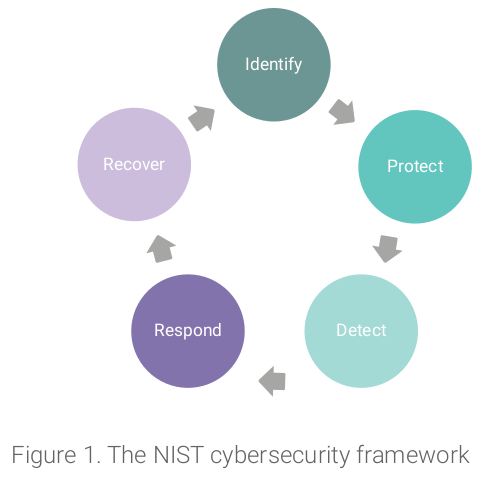
🧠 NIST Cybersecurity Framework for Medical Devices #
The FDA recommends leveraging the National Institute of Standards and Technology (NIST) Cybersecurity Framework.
The framework provides a structured model for cybersecurity risk management.
Identify #
Develop organizational understanding of:
- Assets
- Systems
- Risks
- Capabilities
- Dependencies
Protect #
Implement safeguards to ensure secure operation of critical services and devices.
Examples include:
- Access control
- Encryption
- Authentication
- Network segmentation
Detect #
Establish mechanisms capable of identifying cybersecurity incidents and abnormal behavior.
Respond #
Create procedures for responding to detected cybersecurity events, including:
- Incident handling
- Containment
- Communication
- Recovery coordination
Recover #
Develop resilience and restoration strategies to recover services following cybersecurity incidents.
The NIST framework helps manufacturers create comprehensive and repeatable cybersecurity programs.
📄 Premarket Cybersecurity Documentation #
The FDA expects manufacturers to produce detailed cybersecurity documentation as part of the premarket submission process.
Required Documentation Areas #
Premarket cybersecurity documentation commonly includes:
- Threat modeling
- Vulnerability and risk assessment
- Cybersecurity controls
- Traceability matrices
- Ongoing support plans
- Malware-free shipping procedures
- Cybersecurity labeling
These artifacts demonstrate that cybersecurity considerations were incorporated systematically during development.
🔑 Key Actions Required by Section 524B #
Section 524B emphasizes several core operational cybersecurity responsibilities.
Monitor #
Manufacturers must continuously monitor cybersecurity vulnerabilities affecting their products.
Design #
Devices must be developed using secure-by-design principles.
Patch #
Manufacturers must establish lifecycle patch management strategies to maintain device security after deployment.
Disclosure #
Organizations must support coordinated vulnerability disclosure processes for reporting and resolving security issues responsibly.
SBOM / CBOM #
Cyber devices should include a Software Bill of Materials as part of a broader Cybersecurity Bill of Materials (CBOM) strategy.
📈 The Growing FDA Focus on Cybersecurity #
The FDA’s role in cybersecurity has evolved significantly over time.
Before Section 524B #
Prior to the amendment:
- Cybersecurity was primarily evaluated indirectly through safety and effectiveness reviews
- SBOM requests were inconsistent
- Manufacturers mainly documented why vulnerabilities did not impact essential performance
After Section 524B #
Today, cybersecurity requirements are substantially more comprehensive.
Manufacturers must now demonstrate:
- Secure development processes
- Patch delivery capability
- Continuous vulnerability management
- Lifecycle cybersecurity support
- Mandatory SBOM generation
Cybersecurity is now treated as a core regulatory requirement rather than an optional enhancement.
🧬 The Evolving Role of Medical Device Manufacturers #
Medical device manufacturers now face broader responsibilities extending far beyond initial product release.
Lifecycle Security Ownership #
Manufacturers are expected to maintain cybersecurity throughout:
- Design
- Development
- Validation
- Deployment
- Maintenance
- End-of-life support
This lifecycle-focused approach reflects the reality that cybersecurity risks evolve continuously after deployment.
Increased Engineering and Compliance Demands #
Organizations must now invest in:
- Secure software engineering
- Vulnerability management programs
- Security testing
- Supply chain visibility
- Regulatory documentation
- Post-market support infrastructure
These requirements significantly reshape medical device engineering and operational practices.
🏁 Conclusion #
FDA Section 524B represents a major shift in medical device cybersecurity regulation.
By granting the FDA explicit cybersecurity authority, the regulation establishes stronger requirements for:
- Secure device design
- Vulnerability management
- Patch deployment
- Risk assessment
- Software transparency
- Lifecycle cybersecurity maintenance
Medical device manufacturers must now integrate cybersecurity into every stage of product development and operation while maintaining ongoing support for deployed systems.
Although compliance requirements introduce additional engineering and regulatory complexity, the long-term objective is clear: improving patient safety, protecting healthcare infrastructure, and strengthening trust in connected medical technologies.
As cyber threats continue to evolve, Section 524B will remain a foundational framework shaping the future of secure medical device development.