Why ARINC 653 Matters for the Future of Low-Altitude Avionics
Driven by a new wave of technological innovation, industrial upgrading, and regulatory support, the low-altitude economy is rapidly emerging as a major strategic industry. As application scenarios expand and aircraft platforms diversify, the development of low-altitude aircraft is shifting from isolated technical breakthroughs toward full-system engineering evolution.
At the center of this transformation lies the avionics system.
Whether for UAVs, eVTOL aircraft, or traditional general aviation platforms, avionics software now determines not only flight capability, but also safety, scalability, maintainability, and long-term certification viability. As flight control, communication, navigation, surveillance, and mission systems continue to integrate into increasingly compact computing platforms, software architecture becomes the true foundation of next-generation low-altitude aviation.
For solving these architectural challenges, the commercial aviation industry already possesses a mature and battle-tested solution: ARINC 653.
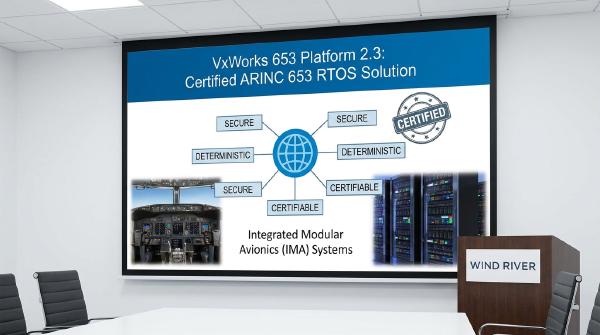
Originally developed for Integrated Modular Avionics (IMA) architectures in modern airliners such as the Airbus A380, Boeing 787, and COMAC C919, ARINC 653 provides standardized mechanisms for software isolation, deterministic scheduling, fault containment, and hardware abstraction.
Today, the low-altitude aviation industry stands at a crossroads: continue relying on fragmented custom architectures, or adopt standardized avionics frameworks capable of supporting long-term safety and scalability.
This article explores why ARINC 653 is increasingly becoming a necessary foundation for low-altitude avionics systems.
✈️ The Architectural Challenges Facing Low-Altitude Aircraft #
Compared to traditional large commercial aircraft, low-altitude aviation platforms evolve much faster and exhibit significantly greater diversity:
- UAVs prioritize lightweight deployment and rapid iteration
- eVTOL platforms demand extreme SWaP optimization
- General aviation aircraft often mix legacy and modern avionics
- Autonomous systems require increasingly complex software stacks
- Multi-vendor integration is becoming unavoidable
This diversity creates several core engineering problems:
| Challenge | Impact |
|---|---|
| Heterogeneous hardware | Difficult software portability |
| Mixed safety-critical workloads | Increased integration risk |
| Rapid platform iteration | High redevelopment costs |
| Multi-core complexity | Hard real-time scheduling issues |
| Fault isolation requirements | Risk of cascading failures |
| Certification pressure | Longer development cycles |
Without a standardized avionics architecture, each new aircraft platform effectively becomes a complete software redesign project.
That approach may work during early experimentation phases, but it becomes economically and technically unsustainable as the industry scales.
🧩 The Core Goals of ARINC 653 #
The primary objective of ARINC 653 is to standardize the interface between avionics application software and core system software through the APEX (APplication/EXecutive) API specification.
Its design philosophy revolves around four major objectives:
1. Portability #
Applications developed against the APEX interface are largely decoupled from specific hardware platforms and operating systems.
This enables:
- Easier migration across hardware generations
- Reduced recertification workload
- Faster product evolution
For low-altitude aircraft manufacturers, portability becomes critical once product lines begin scaling across multiple vehicle classes.
2. Reusability #
Certified avionics software is extremely expensive to develop.
ARINC 653 allows:
- Flight control modules
- Navigation systems
- Communication stacks
- Monitoring applications
to be reused across multiple aircraft platforms with minimal modifications.
This dramatically reduces lifecycle development costs.
🛡️ 3. Modularity #
ARINC 653 eliminates tight coupling between applications and hardware through a layered architecture:
Application Software
        ↓
APEX Interface
        ↓
Core Software / RTOS / Hypervisor
        ↓
Hardware Platform
As long as the APEX interface remains stable, underlying hardware changes have minimal impact on upper-level avionics software.
This is especially valuable in low-altitude aviation, where:
- suppliers frequently change,
- hardware evolves rapidly,
- and long-term platform maintenance is unavoidable.
🔒 4. Mixed-Criticality Integration #
One of ARINC 653’s most important capabilities is safely integrating applications with different safety levels on the same computing hardware.
For example:
| Application | Safety Criticality |
|---|---|
| Flight control | DAL A |
| Navigation | DAL B |
| Cabin display | DAL C |
| Entertainment / telemetry | DAL D |
Without strict isolation, lower-criticality software can jeopardize safety-critical functions.
ARINC 653 solves this through deterministic partitioning.
⚙️ Core Technical Mechanisms of ARINC 653 #
🧠 1. Partitioning Mechanism #
Partitioning is the foundation of ARINC 653.
It consists of two forms of isolation:
| Partition Type | Purpose |
|---|---|
| Spatial partitioning | Memory isolation |
| Temporal partitioning | CPU time isolation |
Together, they ensure applications cannot interfere with one another.
Single-Core Systems #
Traditional implementations rely on the MMU (Memory Management Unit):
- Each partition receives isolated virtual memory regions
- Unauthorized memory access triggers exceptions
- Applications cannot corrupt neighboring partitions
Multi-Core Systems and Virtualization #
Modern avionics increasingly use multi-core SoCs.
Current mainstream implementations introduce a Type-1 Hypervisor architecture.
Example:
Hardware
   ↓
Hypervisor (EL2)
   ↓
Partition OS
   ↓
Applications
Platforms such as:
- Wind River Helix
- LynxSecure
- PikeOS
use hardware-assisted virtualization technologies:
- ARM EL2
- Intel VT-x
- AMD-V
- SMMU/IOMMU
to achieve robust hardware-level isolation.
This approach provides:
- extremely fast context switching,
- strong fault containment,
- and scalable multi-core scheduling.
⏱️ 2. Deterministic Scheduling #
ARINC 653 defines two independent scheduling layers.
Partition Scheduling #
Partition scheduling is fully deterministic.
The system executes partitions according to a predefined cyclic scheduling table:
Time Frame:
| Partition A | Partition B | Partition C |
Characteristics:
- Fixed execution windows
- No dynamic competition between partitions
- Predictable timing behavior
- Strong real-time guarantees
This is critical for flight certification.
Process Scheduling Within Partitions #
Inside each partition, processes are scheduled independently using:
- preemptive priority scheduling,
- processor affinity,
- POSIX-like mechanisms.
This gives developers familiar programming semantics while preserving global determinism.
🚨 3. Health Monitor (HM) #
The Health Monitor is ARINC 653’s fault management framework.
Its purpose is preventing localized failures from escalating into system-wide catastrophes.
The HM defines three levels of fault handling:
| Error Level | Scope | Typical Actions |
|---|---|---|
| Module Level | Entire avionics module | Reset module / shutdown |
| Partition Level | Single partition | Restart partition |
| Process Level | Individual task | Kill or restart process |
Examples #
Process-Level Errors #
- Stack overflow
- Illegal memory access
- Invalid system call
Possible recovery:
- Restart task
- Reinitialize process
- Escalate to partition-level recovery
Partition-Level Errors #
- Partition initialization failure
- Configuration corruption
Possible recovery:
- Cold restart
- Warm restart
- Isolation into idle state
Module-Level Errors #
- Hypervisor faults
- Power anomalies
- Scheduling failures
Possible recovery:
- Full module reset
- System-wide recovery procedures
This hierarchical design forms an extremely powerful safety net for fault isolation.
🚁 Why ARINC 653 Is Especially Valuable for Low-Altitude Aviation #
🔐 1. Strong Safety Isolation #
Low-altitude aircraft increasingly combine:
- autonomy,
- AI workloads,
- communications,
- navigation,
- vision processing,
- and flight control
on shared computing hardware.
Without deterministic partitioning:
- a software bug,
- memory leak,
- or deadlock
can jeopardize the entire aircraft.
ARINC 653 prevents cascading failures by design.
⚡ 2. High Availability and Fast Recovery #
Through Health Monitor mechanisms:
- faults can be detected rapidly,
- isolated immediately,
- and recovered independently.
Instead of rebooting an entire aircraft computer, only the affected partition may need restarting.
This greatly improves operational reliability.
📦 3. SWaP Optimization #
SWaP (Size, Weight, and Power) is one of the most important constraints in:
- eVTOLs,
- UAVs,
- battery-powered aircraft.
Traditional federated avionics architectures require many separate computing boxes.
IMA architectures enabled by ARINC 653 consolidate:
- flight control,
- mission systems,
- displays,
- communication modules
onto shared computing hardware.
Benefits include:
- reduced weight,
- lower power consumption,
- simplified wiring,
- lower maintenance complexity.
This is especially important for electric aircraft with tight battery budgets.
💰 4. Lower Lifecycle Costs #
Standardized interfaces allow:
- software reuse,
- easier certification reuse,
- hardware migration,
- supplier flexibility.
Over time, this dramatically reduces:
- engineering costs,
- maintenance costs,
- recertification burden.
As low-altitude aviation transitions from prototypes to mass deployment, lifecycle economics become decisive.
🧭 ARINC 653 and the Future of the Low-Altitude Economy #
The low-altitude economy is entering a phase where:
- scale,
- safety,
- certification,
- and operational reliability
matter more than raw experimentation speed.
Eventually, the winners in this industry will not simply be those who innovate fastest, but those capable of building:
- scalable systems,
- certifiable architectures,
- and sustainable engineering ecosystems.
ARINC 653 offers precisely this kind of foundation.
It transforms avionics development from:
- tightly coupled custom integration
into:
- modular,
- deterministic,
- reusable,
- safety-oriented system engineering.
For low-altitude aircraft seeking long-term commercial viability, adopting aviation-grade architectural standards is no longer optional—it is becoming inevitable.
ARINC 653 may not solve every challenge in low-altitude aviation, but it provides one of the few mature and proven frameworks capable of supporting the industry’s transition from experimental platforms to truly large-scale, safety-critical aerospace systems.