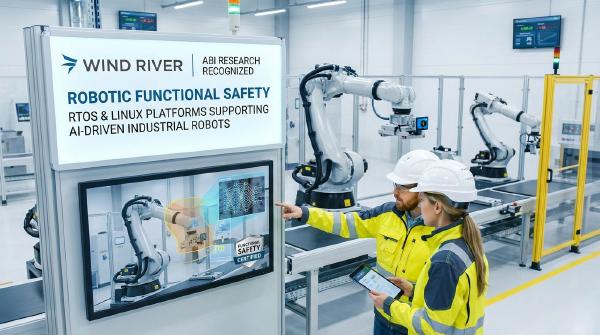
Edge AI in the Real World: Building Scalable, Reliable AI Systems
Artificial intelligence is rapidly moving beyond centralized cloud infrastructure into physical environments where decisions must be made in real time. From industrial automation and robotics to aerospace and autonomous systems, Edge AI is reshaping how enterprises deploy intelligent applications.
However, deploying AI outside the data center is far more than relocating inference workloads closer to devices. It introduces new architectural, operational, and lifecycle challenges that traditional cloud-native strategies were never designed to address. Organizations that recognize Edge AI as a distinct computing paradigm are better positioned to build scalable, resilient, and continuously evolving intelligent systems.
🚀 Why Edge AI Requires a Different Architectural Approach #
The evolution from centralized AI to Edge AI closely resembles previous transitions in enterprise computing. Just as cloud adoption demanded new operational models, Edge AI introduces an entirely new discipline that combines:
- Artificial intelligence
- Real-time embedded computing
- Distributed infrastructure
- Fleet lifecycle management
- Operational observability
Treating Edge AI as simply an extension of cloud infrastructure often leads to deployment bottlenecks and scalability issues. Successful implementations instead embrace the unique characteristics of edge environments, including limited connectivity, heterogeneous hardware, deterministic execution, and long operational lifecycles.
⚙️ Real-Time Embedded Systems Remain the Foundation #
Many Edge AI deployments operate in environments where latency and deterministic behavior are non-negotiable.
Applications such as:
- Industrial automation
- Robotics
- Aerospace systems
- Autonomous vehicles
- Mission-critical infrastructure
require AI inference to coexist with safety-critical control loops.
Unlike traditional cloud workloads, these systems cannot tolerate unpredictable execution delays. AI must enhance decision-making without compromising deterministic system behavior, making real-time embedded operating systems an essential foundation for production deployments.
🔄 Lifecycle Management Is Critical for Long-Term Success #
Deploying an AI model is only the beginning of an Edge AI system’s lifecycle.
Production environments continuously evolve as:
- Machine learning models improve
- Applications receive new features
- Security vulnerabilities are patched
- Hardware platforms expand
- New devices join existing fleets
Managing these changes across geographically distributed and intermittently connected devices requires a comprehensive lifecycle management framework.
By extending Continuous Integration and Continuous Deployment (CI/CD) principles beyond the cloud, organizations can safely:
- Deploy new AI models
- Roll back problematic releases
- Track software versions
- Monitor system health
- Maintain observability across distributed fleets
This approach enables enterprises to continuously improve deployed intelligence without disrupting mission-critical operations.
🌐 Building a Unified Cloud-to-Edge Infrastructure #
Modern Edge AI architectures span multiple computing layers rather than relying on a single execution environment.
A well-designed infrastructure typically includes:
- Centralized AI data centers for model training
- Regional edge clusters for coordination and aggregation
- Embedded edge devices for low-latency inference and control
Each layer serves a distinct purpose:
| Layer | Primary Role |
|---|---|
| Central Cloud | Model training, large-scale analytics, orchestration |
| Regional Edge | Data aggregation, localized intelligence, workload coordination |
| Embedded Devices | Real-time inference, deterministic control, sensor interaction |
This distributed architecture allows organizations to place compute, storage, and AI inference where they deliver the greatest operational value while minimizing unnecessary data movement and latency.
🏗️ Designing Edge AI for Continuous Change #
The most significant challenges in Edge AI are rarely caused by machine learning algorithms themselves.
Instead, enterprises encounter difficulties at the intersection of:
- Software and physical systems
- Autonomous decision-making and operational accountability
- Continuous learning and production stability
- Distributed infrastructure and lifecycle governance
Organizations that acknowledge these structural challenges early can build platforms that:
- Scale efficiently
- Adapt safely
- Improve continuously
- Support long operational lifecycles
Conversely, organizations that overlook these architectural considerations often struggle to move beyond pilot projects into full-scale production deployments.
📊 A Complete Edge AI Architecture #
Successful enterprise Edge AI platforms integrate several complementary capabilities into a unified architecture.
Real-Time Execution #
Provides deterministic behavior for latency-sensitive applications operating in physical environments.
Distributed Infrastructure #
Connects cloud platforms, regional edge resources, and embedded devices into a cohesive computing ecosystem.
Data Collection and Observability #
Captures operational insights that enable continuous optimization, model improvement, and predictive maintenance.
Lifecycle Management #
Ensures software, AI models, and system configurations remain secure, consistent, and up to date across distributed device fleets.
Together, these capabilities create sustainable Edge AI systems that remain operational, maintainable, and adaptable throughout years of deployment.
🌍 From AI Experiments to Operational Reality #
The industry has already crossed the threshold where AI is leaving centralized data centers and becoming embedded within physical systems.
The remaining challenge is no longer whether Edge AI is technically feasible, but whether enterprise architectures are prepared to support its operational complexity.
Organizations deploying intelligent systems at the edge must account for:
- Real-time execution constraints
- Long-lived embedded deployments
- Distributed fleet management
- Heterogeneous hardware platforms
- Continuous software and AI model evolution
Addressing these requirements demands an architectural strategy that spans the full software lifecycle—from centralized cloud environments to resource-constrained embedded devices.
Enterprises that invest in this foundation can confidently transition from isolated AI demonstrations to production-scale intelligent systems capable of operating reliably in real-world environments.