
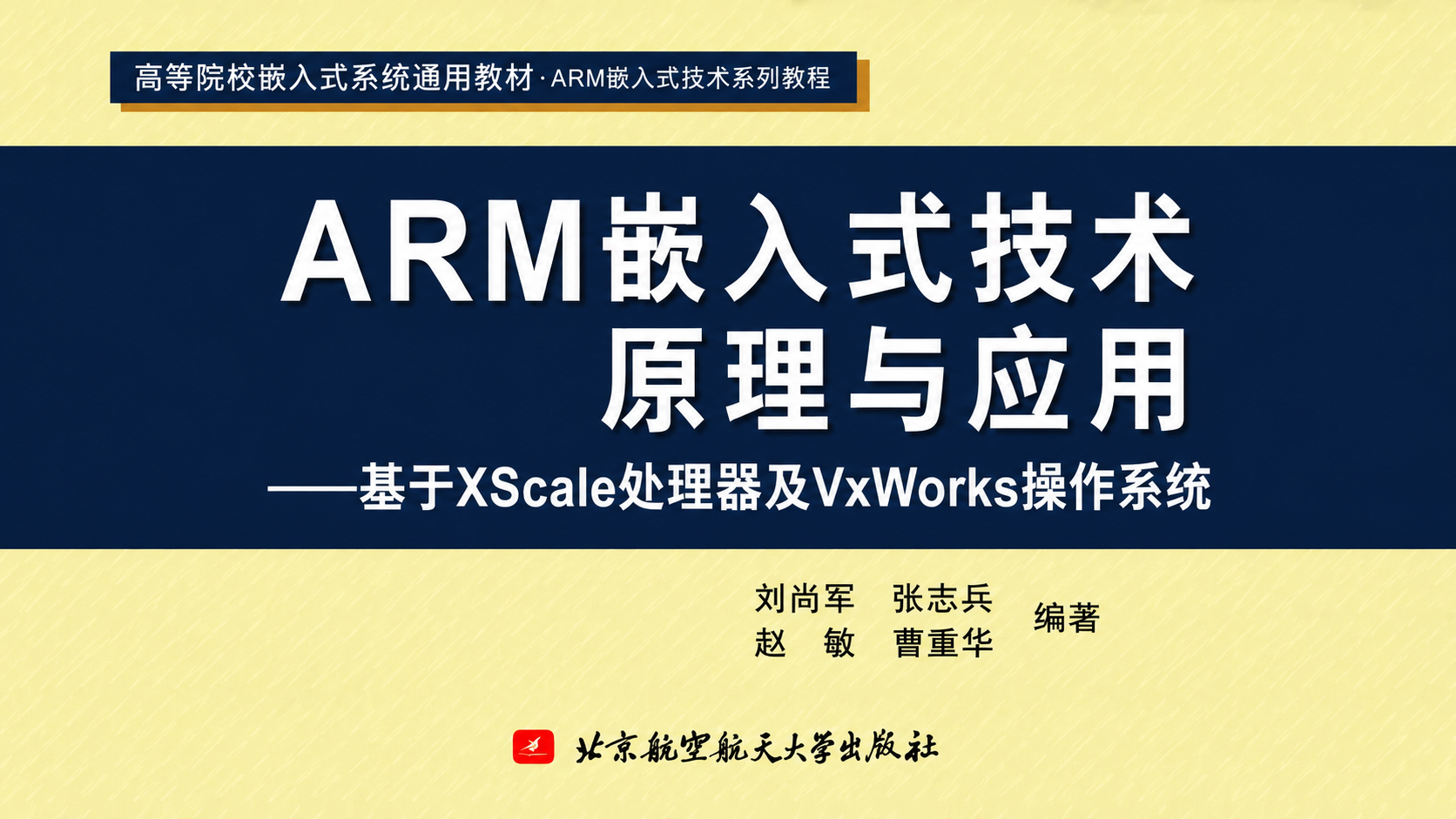
ARM Embedded Systems Guide: XScale PXA270 and VxWorks RTOS
🧭 Embedded Systems Engineering with ARM and VxWorks #
This syllabus presents a structured roadmap for mastering ARM-based embedded system development, focusing on the Intel/Marvell XScale PXA270 processor family and the VxWorks real-time operating system (RTOS).
The curriculum emphasizes full-stack embedded engineering, spanning hardware architecture, RTOS internals, device driver development, and system-level integration.
📚 Foundations of ARM Embedded Systems #
Embedded systems combine tightly coupled hardware and software designed for deterministic, application-specific execution.
Key foundational concepts include:
- Embedded system lifecycle and evolution
- ARM processor family architecture overview
- Real-time operating system design principles
- Deterministic performance and system constraints
- Application domains in industrial and consumer systems
⚙️ ARM Development Workflow and Engineering Lifecycle #
System-level embedded design process #
The ARM embedded development lifecycle includes:
- Requirements analysis and system specification
- PCB design and hardware debugging
- OS porting and Board Support Package (BSP) integration
- Application-layer development and debugging
Development environments may include ICE-based debugging and monitor-based execution modes for target systems.
🧠 ARM Architecture and Instruction Model #
Core architectural principles #
The ARM architecture is based on a RISC design philosophy emphasizing efficiency and deterministic execution.
Key technical components:
- ARM vs Thumb execution states
- Register architecture and CPSR/SPSR status handling
- Pipeline execution model
- Endianness considerations (big vs little endian)
- Exception handling and interrupt vector architecture
Assembly-level programming model #
Developers must understand:
- Instruction formats and conditional execution
- Addressing modes and operand handling
- ARM and Thumb instruction set differences
- Mixed C and assembly interoperability
🔌 XScale PXA270 Hardware Architecture #
Embedded processor system design #
The Intel/Marvell PXA270 platform introduces a complete embedded applications processor architecture.
Core hardware subsystems include:
- GPIO and interrupt controller design
- UART serial communication interfaces
- LCD display controllers
- I2C and storage interfaces (CF/PCMCIA)
- Ethernet and ADC subsystems
- Touchscreen and legacy peripheral integration
System-level hardware design #
Embedded system design also includes:
- Power regulation and clock generation
- Reset and boot sequencing systems
- Memory subsystems (SDRAM, Flash)
- JTAG debugging interfaces
⚙️ VxWorks RTOS Software Architecture #
Kernel and system services #
VxWorks provides a deterministic real-time kernel widely used in aerospace and industrial applications.
Key subsystems:
- Multitasking kernel and task lifecycle management
- IPC mechanisms (semaphores, message queues, pipes)
- Memory management and MMU support
- Interrupt service routines (ISR) and exception handling
- System timing, watchdogs, and scheduling
Driver and file system model #
- Character, block, and network driver frameworks
- END (Enhanced Network Driver) architecture
- File systems including dosFs and TrueFFS
🧪 VxWorks Development Toolchain #
Legacy and industrial toolchains #
Development environments include:
- Tornado IDE for project development
- Target server and debugging infrastructure
- WindView system visualization tools
- Boot image generation and kernel customization
BSP development workflow #
Board Support Package development includes:
- Bootloader and initialization routines (romInit.s)
- Hardware clock and interrupt configuration
- Makefile-driven build systems
- Device-specific system configuration (config.h, sysLib.c)
🧰 Device Driver and Kernel-Level Development #
Driver architecture models #
VxWorks supports multiple driver categories:
- Character device drivers (UART, input devices)
- Block storage drivers (RAMDISK, flash systems)
- Network interface drivers (BSD-style and END models)
Implementation concepts #
- Driver entry points (open, read, write, ioctl)
- Interrupt-driven I/O handling
- Memory-mapped device control
- Kernel-user space interaction
🔄 Real-Time System Programming #
Task and scheduling model #
Key RTOS concepts:
- Preemptive priority-based scheduling
- Task creation and lifecycle APIs
- Context switching behavior
- Reentrant and thread-safe design patterns
Inter-task communication #
- Semaphores (binary, counting, mutex)
- Message queues for structured IPC
- Shared memory synchronization
- Pipe-based streaming communication
Reliability mechanisms #
- Watchdog timers for fault recovery
- ISR design constraints and latency control
- Exception handling and system recovery
🌐 Embedded Networking and GUI Systems #
Networking stack integration #
- BSD socket API implementation
- Real-time communication protocols
- Network driver integration in VxWorks
WindML graphical subsystem #
- Framebuffer-based rendering pipeline
- Input device integration (touch, keypad)
- Window management and event handling
- Embedded GUI application development
🧩 Advanced Embedded System Case Studies #
Industrial and IoT applications #
Case studies include:
- Vehicle telematics and GPS tracking systems
- Wireless sensor networks using ZigBee
- Distributed embedded control systems
These scenarios integrate:
- RTOS task scheduling
- Network communication stacks
- Low-level hardware integration
🧭 Conclusion: Building Industrial-Grade Embedded Expertise #
This syllabus provides a complete pathway from ARM architecture fundamentals to full VxWorks RTOS system engineering.
By combining hardware design, OS internals, driver development, and real-time application design, engineers gain the skills required for mission-critical embedded system development in automotive, industrial, and telecommunications domains.