
VxWorks Software Development Projects: Practical RTOS Engineering Guide
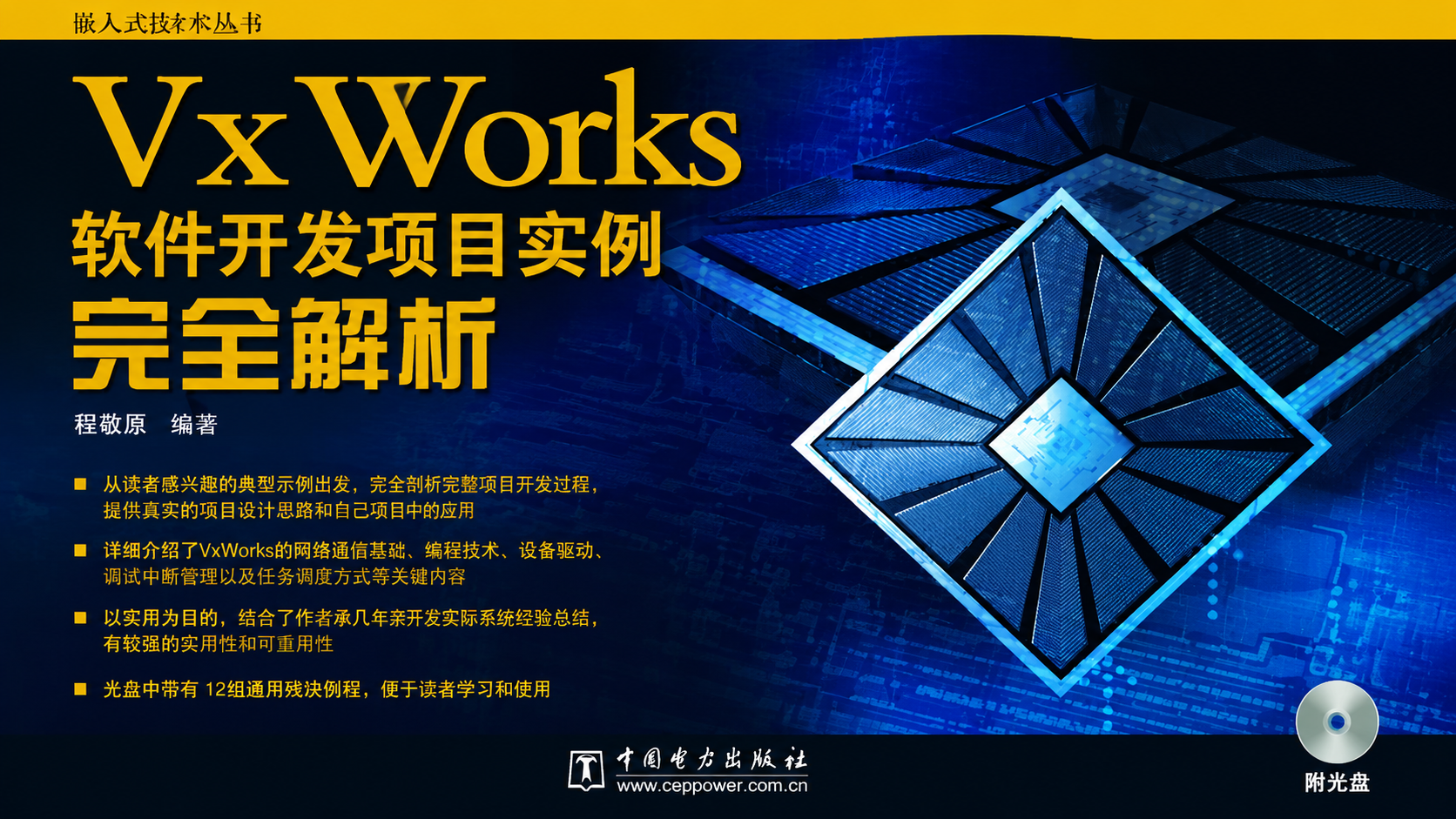
This guide presents a structured overview of practical VxWorks software development projects, focusing on real-world embedded system workflows built on a real-time operating system (RTOS). The material emphasizes hands-on engineering practices rather than abstract theory, aligning closely with how industrial embedded applications are actually developed and deployed.
Project-Centered RTOS Development Workflow #
VxWorks development is organized around a practical software lifecycle, where system design, implementation, and validation are tightly coupled with hardware constraints.
The development flow typically includes:
- Initial system planning and architecture definition
- Hardware-software interaction modeling
- Network communication stack integration
- Incremental module implementation in C/C++
- Testing and validation in simulated and real environments
This structured progression ensures developers can move from system design to fully functional embedded applications in a controlled and predictable manner.
Network Communication and System Foundations #
A core focus of VxWorks-based development is network communication, which serves as the backbone for distributed and connected embedded systems.
Typical topics include:
- Low-level socket communication in real-time environments
- Protocol handling and data transmission workflows
- Hardware abstraction for network interfaces
- Timing-sensitive communication under deterministic scheduling constraints
These concepts form the foundation for more advanced system-level integration tasks in embedded deployments.
Hardware and Software Integration in RTOS Environments #
VxWorks systems operate under strict timing and reliability constraints, requiring close coordination between hardware behavior and software execution.
Key engineering considerations include:
- Direct interaction with embedded hardware components
- Real-time task scheduling and deterministic execution
- Interrupt handling and low-latency response design
- Memory-constrained system optimization
The development model emphasizes reliability and predictability, which are essential in aerospace, industrial control, and mission-critical systems.
Reusable Modules and Engineering Tooling #
A major strength of VxWorks project ecosystems is the availability of reusable C and C++ modules, designed for rapid adaptation in real engineering environments.
Typical resources include:
- General-purpose VxWorks module implementations
- Windows-based debugging and testing utilities
- Cross-platform reusable code patterns for embedded systems
These components reduce development time by providing validated building blocks for common RTOS functionality.
Target Audience and Practical Value #
This type of material is primarily aimed at:
- Students in computer science and embedded systems programs
- Engineers working in real-time and industrial software domains
- Research and development teams using VxWorks in production systems
The focus on applied workflows helps bridge the gap between academic learning and industrial embedded development.
Conclusion #
VxWorks remains widely used in mission-critical and industrial systems due to its deterministic scheduling model and strong hardware integration capabilities. A project-based learning approach provides a practical pathway for mastering embedded development in C and C++ within real-time operating environments.