Embedded VxWorks System Development and Application
VxWorks has long been one of the most widely used real-time operating systems (RTOS) in aerospace, defense, industrial automation, telecommunications, and other mission-critical embedded environments. Embedded VxWorks System Development and Application provides a practical introduction to VxWorks fundamentals while also exploring advanced topics such as BSP development, device drivers, system configuration, and application design.
This book is particularly valuable for engineers seeking to understand how VxWorks systems are built from the ground up, from boot initialization and kernel services to hardware support packages and application deployment.

📖 Book Overview #
The book begins with a thorough introduction to the VxWorks operating system, explaining its architecture and core services, including:
- Task management
- Inter-task communication
- Memory management
- Interrupt handling
- Timer services
- File systems and I/O
Building on these fundamentals, the author combines practical engineering experience with real-world examples to demonstrate BSP development techniques, device driver implementation, and application design methodologies.
The result is a useful reference for embedded software engineers working with legacy VxWorks environments such as Tornado and VxWorks 5.x/6.x platforms.
🚀 What You’ll Learn #
Readers will gain practical knowledge in several important areas:
- VxWorks kernel architecture
- Real-time task scheduling
- Synchronization and IPC mechanisms
- BSP development workflows
- Embedded networking
- Device driver implementation
- Tornado development environment
- GCC and Makefile-based project management
- Application debugging and performance analysis
The book also includes numerous development examples that illustrate common design patterns and engineering practices used in production embedded systems.
📚 Chapter Highlights #
🧩 Chapter 1 — Introduction to VxWorks #
The opening chapter introduces VxWorks and its role in embedded computing.
Key topics include:
- VxWorks application domains
- Operating system features
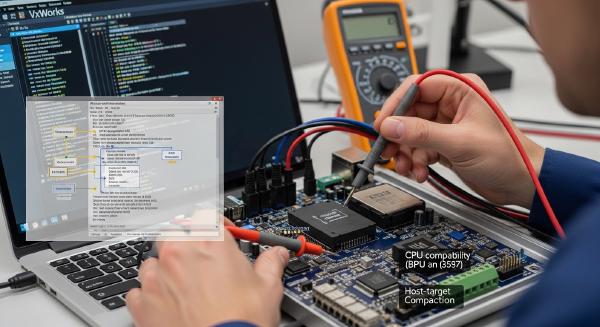
- Supported host and target platforms
- Tornado development tools
- WindPower analysis tools
- Optional VxWorks components
- Multiprocessor extensions
- Flash file system technologies
⚙️ Chapter 2 — VxWorks Kernel Fundamentals #
This chapter explains the core mechanisms that power the operating system.
Topics include:
- Task management
- IPC and synchronization
- Interrupt processing
- Timer services
- Memory management
- File systems
- System startup
- Application configuration
The chapter also shares practical development recommendations gathered from real-world VxWorks projects.
🔧 Chapter 3 — BSP Fundamentals #
Board Support Packages are a critical component of every VxWorks deployment.
This chapter covers:
- BSP architecture
- BSP directory structures
- Development workflows
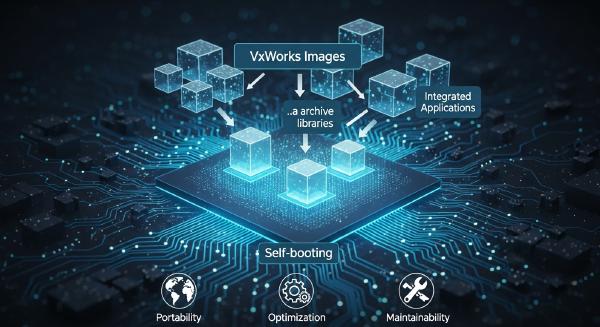
- Image generation
- Boot process customization
- Driver integration
Readers are introduced to the complete BSP development lifecycle from setup through deployment.
🖥️ Chapter 4 — BSP Development Case Study #
A detailed example based on the Motorola MPC8260 processor demonstrates practical BSP implementation.
Topics include:
- Processor architecture
- Communication Processor Module (CPM)
- SDRAM initialization
- Boot ROM design
- Ethernet driver development
- Serial driver implementation
- BSP testing and validation
This chapter provides valuable insight into low-level hardware bring-up procedures.
🛠️ Chapter 5 — Tornado Development Environment #
The Tornado IDE was the primary development platform for many generations of VxWorks systems.
Covered topics include:
- Installation and configuration
- Workspace management
- Project creation
- Compilation workflows
- Target simulator usage
- Debugging techniques
- Memory analysis
- Performance monitoring
📦 Chapter 6 — Compiler and Build System #
This chapter focuses on software build management.
Subjects include:
- Makefile fundamentals
- Build automation
- GCC compiler usage
- Compiler extensions
- Project organization
- Build optimization techniques
Developers maintaining legacy VxWorks projects will find this section particularly useful.
💡 Chapter 7 — Practical Application Examples #
The final chapter presents hands-on development examples covering:
- Task design
- Inter-task communication
- Interrupt handling
- Socket programming
- Multi-instance task management
- C++ applications
- Datagram communication
- RAM disk drivers
- Virtual memory drivers
- Soft scheduling examples
These examples help bridge the gap between theory and real-world implementation.
🎯 Who Should Read This Book? #
This book is well suited for:
- Embedded software engineers
- BSP developers
- Device driver developers
- RTOS students and researchers
- Engineers maintaining legacy VxWorks systems
- Developers transitioning into aerospace or industrial embedded projects
Although some tools discussed—such as Tornado—belong to older generations of VxWorks, the underlying concepts remain highly relevant and continue to provide valuable insight into modern embedded system design.
📝 Final Thoughts #
Embedded VxWorks System Development and Application serves as both an introductory guide and a practical reference for engineers working with VxWorks-based platforms. Its strongest value lies in the combination of operating system theory, BSP implementation details, and application-level examples that demonstrate how complete embedded systems are designed and deployed.
For developers interested in understanding the internals of VxWorks, particularly BSP architecture and low-level system development, this book remains a useful addition to an embedded engineering library.