
Mastering VxWorks RTOS Development with Tornado II
📘 Overview #
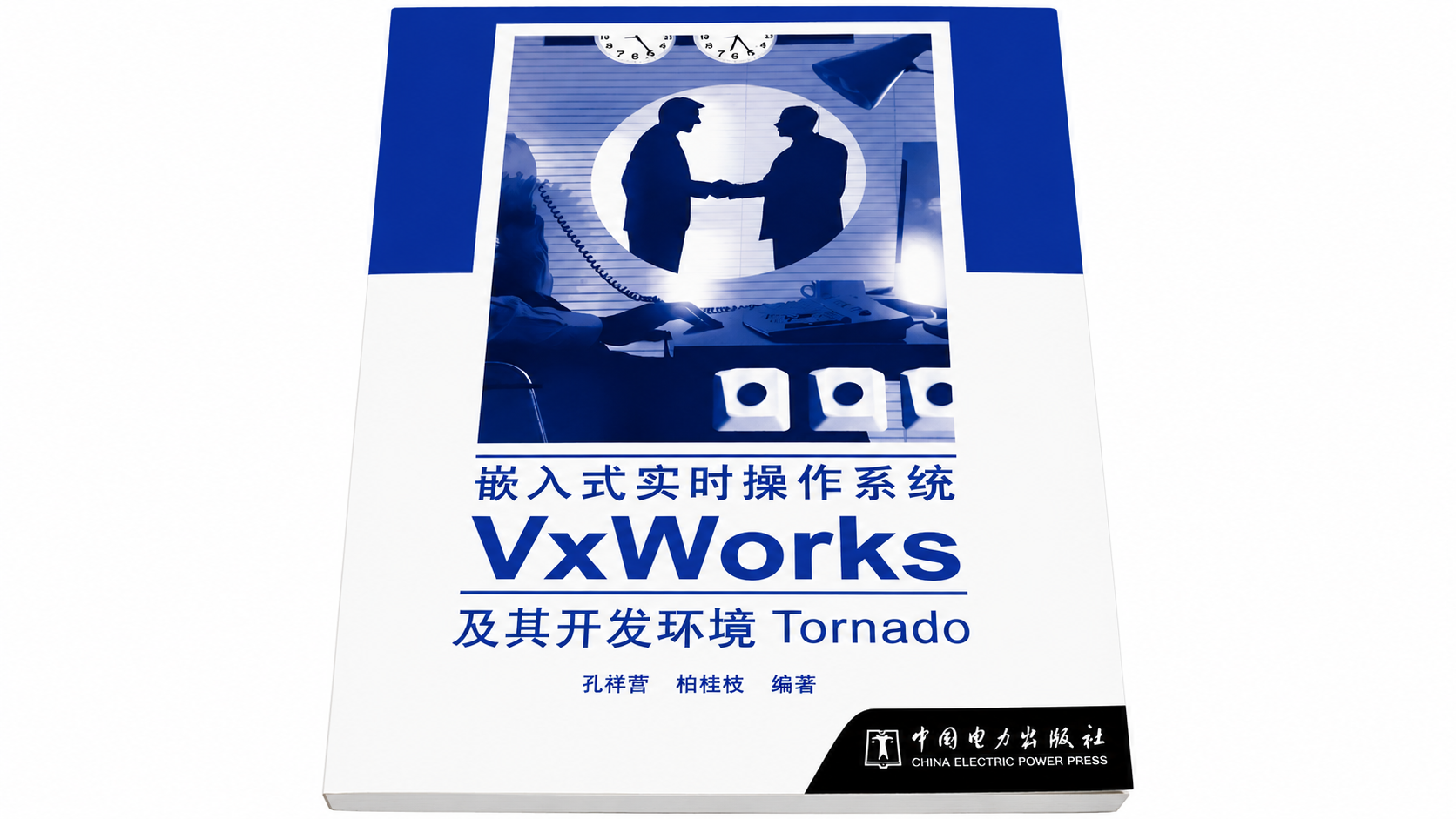
Embedded Real-Time Operating System VxWorks and Its Development Environment Tornado is a practical and comprehensive guide to developing software with the VxWorks real-time operating system and the Tornado II Integrated Development Environment. Designed for engineers working in embedded and real-time computing, the book combines foundational RTOS concepts with hands-on development techniques, enabling readers to build reliable and efficient embedded applications.
Drawing from both authoritative technical references and decades of real-world engineering experience, the author presents a structured approach to VxWorks development. As one of the earliest VxWorks practitioners in China, the author provides valuable insights into system architecture, application design, debugging methodologies, and performance optimization within resource-constrained embedded environments.
The book serves as both a learning resource and a long-term technical reference for developers seeking to understand the internal mechanisms of VxWorks, master the Tornado development workflow, and build production-grade real-time systems.
⚙️ Technical Metadata #
Core Information #
| Attribute | Details |
|---|---|
| Title | Embedded Real-Time Operating System VxWorks and Its Development Environment Tornado |
| Primary Platform | VxWorks RTOS |
| Development Environment | Tornado II IDE |
| Technical Domains | Embedded Systems, Real-Time Computing, Systems Programming |
| Key Technologies | Task Scheduling, Intertask Communication, TCP/IP Networking, Interrupt Processing |
| Target Audience | Embedded Software Engineers, RTOS Developers, System Architects |
🏗️ Foundations of Embedded Real-Time Development #
The book begins by introducing the fundamental principles that distinguish real-time operating systems from conventional desktop and server operating systems.
Embedded System Software Architecture #
- Characteristics of embedded real-time systems
- Deterministic execution requirements
- Resource-constrained software design
- Reliability and predictability considerations
Real-Time Operating System Concepts #
- Core RTOS services
- Scheduling models and priorities
- Real-time responsiveness
- Application execution environments
Readers gain a solid understanding of the design philosophies that drive modern embedded software development and the role VxWorks plays in mission-critical systems.
🛠️ Getting Started with Tornado II #
Tornado II was the primary development environment for multiple generations of VxWorks releases. The book provides practical guidance on configuring and using the toolchain effectively.
Development Environment Setup #
- Installing and configuring Tornado II
- Creating and managing workspaces
- Project configuration and build settings
- Target server integration
Development Workflow #
- Source code management
- Compilation and linking processes
- Downloading applications to target systems
- Monitoring runtime behavior
This section helps developers establish a productive workflow for developing and testing embedded applications.
🔄 Multitasking and Concurrency Programming #
Task management is one of the most important aspects of VxWorks development. The book provides detailed coverage of the multitasking model and its associated programming interfaces.
Task Architecture #
- Task creation and deletion
- Task lifecycle management
- State transitions and scheduling
- Priority-based execution
Task Programming Interfaces #
- Native VxWorks task APIs
- Task control mechanisms
- Context switching fundamentals
- Performance considerations
Understanding task management is critical for designing deterministic applications capable of meeting strict real-time requirements.
🔗 Intertask Communication and Synchronization #
Effective communication and synchronization between concurrent tasks are essential for building stable and scalable real-time systems.
Intertask Communication Mechanisms #
- Message queues
- Semaphores
- Shared memory
- Event signaling
Synchronization Strategies #
- Resource protection techniques
- Deadlock prevention
- Priority inversion considerations
- Real-time communication patterns
The book explains how these mechanisms can be used to coordinate complex software components while maintaining predictable system behavior.
⚡ Signals, Interrupts, and Timing Services #
Hardware interaction lies at the heart of embedded software. This section examines the low-level mechanisms used to handle asynchronous events and time-sensitive operations.
Signal Processing #
- POSIX signal support
- Signal generation and handling
- Application-level event notification
Interrupt Management #
- Interrupt architecture
- Interrupt Service Routine (ISR) design
- Deferred processing techniques
- Interrupt latency optimization
Timing Mechanisms #
- System clocks
- Software timers
- Time-based scheduling
- Real-time event management
These topics provide the foundation for designing responsive and deterministic embedded applications.
🐞 Debugging and System Analysis #
Diagnosing software defects in embedded environments often requires specialized tools and methodologies.
Debugging Environment Construction #
- Setting up target debugging systems
- Runtime inspection techniques
- Symbol and memory analysis
- Breakpoint and trace mechanisms
Practical Case Studies #
- Common development issues
- Troubleshooting methodologies
- Performance bottleneck identification
- System stability analysis
The practical examples presented throughout this section help developers improve their debugging efficiency and problem-solving skills.
🌐 Network Programming in VxWorks #
Modern embedded systems increasingly rely on network connectivity. The book introduces networking fundamentals and demonstrates how to develop distributed applications using the VxWorks networking stack.
TCP/IP Networking #
- Network stack architecture
- Socket programming fundamentals
- Protocol implementation concepts
- Network service integration
Embedded Network Applications #
- Communication protocols
- Reliable data transfer
- Real-time network considerations
- Performance optimization techniques
Developers learn how to design network-enabled embedded systems that maintain both performance and reliability.
🖥️ Client/Server System Development #
The book explores client/server software architecture as applied to embedded and industrial systems.
Client/Server Design Patterns #
- Distributed application architecture
- Request-response communication models
- Resource sharing mechanisms
- Fault tolerance strategies
Practical Implementation #
- TCP/IP-based communication services
- Remote control systems
- Embedded management platforms
- Industrial networking applications
These concepts help developers build scalable and maintainable distributed solutions.
🔧 VxWorks Configuration and Customization #
One of VxWorks’ key strengths is its flexibility. The book explains how to customize the operating system to meet the specific requirements of embedded hardware platforms.
Kernel Configuration #
- Component selection
- Feature enablement and removal
- Memory footprint optimization
- Performance tuning
System Customization #
- Hardware-specific adaptation
- Application-driven optimization
- Deployment considerations
- Resource management strategies
Readers gain practical experience tailoring VxWorks images to fit real-world deployment scenarios.
📚 Detailed Contents #
Chapter Structure #
- Preface
- Chapter 1: Embedded Real-Time System Software Design
- Chapter 2: VxWorks Operating System and Real-Time Applications
- Chapter 3: Getting Started with Tornado
- Chapter 4: VxWorks Tasks and Task Programming Interfaces
- Chapter 5: Intertask Communication
- Chapter 6: Signals, Interrupt Handling, and Timing Mechanisms
- Chapter 7: Establishing a Debugging Environment and Case Analysis
- Chapter 8: Network Programming
- Chapter 9: Client/Server Programming
- Chapter 10: VxWorks Operating System Configuration
- Chapter 11: Programming in Practice
- Appendix: References
🎯 Why This Book Matters #
Although newer embedded platforms and development environments have emerged, VxWorks remains widely deployed in aerospace, defense, industrial automation, telecommunications, transportation, and other mission-critical industries. Many organizations continue to maintain and enhance systems built on VxWorks and Tornado-based development workflows.
This book provides a practical roadmap for understanding the architecture, development practices, and engineering principles that underpin these systems. By mastering the concepts presented throughout the text, readers will be better equipped to:
- Develop reliable real-time applications
- Design multitasking embedded systems
- Implement efficient intertask communication
- Build network-enabled embedded solutions
- Debug complex RTOS environments
- Customize and optimize VxWorks deployments
🏁 Conclusion #
Embedded Real-Time Operating System VxWorks and Its Development Environment Tornado offers a balanced combination of theoretical foundations and practical engineering guidance. Covering everything from task management and synchronization to networking, debugging, and kernel customization, the book provides a complete introduction to the VxWorks development ecosystem.
For engineers seeking to understand legacy RTOS environments, maintain existing VxWorks deployments, or strengthen their expertise in embedded real-time software development, this book serves as both a valuable learning resource and a dependable technical reference.